

You have locked the door, loaded the car, and you are finally heading out for summer. The packing is done, the travel plans are set, and the list of people to call has been checked off.
At that point, most homeowners are focused on where they are going, not on what they are leaving behind. However, while you are away enjoying vacation, your home continues to face the everyday conditions of summer.
Heat builds throughout the day, and humidity levels can gradually rise indoors, especially when a home remains closed up for weeks. Because no one is there to notice unusual odors, damp spots, or small maintenance issues, minor problems can quietly develop into much larger ones.
The good news is that many of these problems are preventable with a little preparation before you leave. In this guide, we’ll walk through the key things Maine and New Hampshire homeowners should check before heading out for the summer.
Why Summer Is Actually a High-Risk Season for Unoccupied Homes in Maine and New Hampshire
The Season Most Homeowners Don’t Worry About (But Should)
When homeowners think about property damage risks, they usually think of winter. Because of this, summer often feels like the safer season. However, in reality, an empty home can face a different set of risks during the warmer months.
For example, when a house sits vacant throughout June, July, or August, indoor humidity levels can gradually rise. If the air conditioning is not running consistently and windows remain closed, moisture has fewer opportunities to escape. As a result, excess humidity can build up unnoticed.
What Makes New England Summers Particularly Hard on Empty Homes
Warm temperatures and humid air in Maine and New Hampshire can introduce excess moisture into a property. Over time, that moisture can work its way into walls, crawl spaces, basements, and even areas beneath flooring.
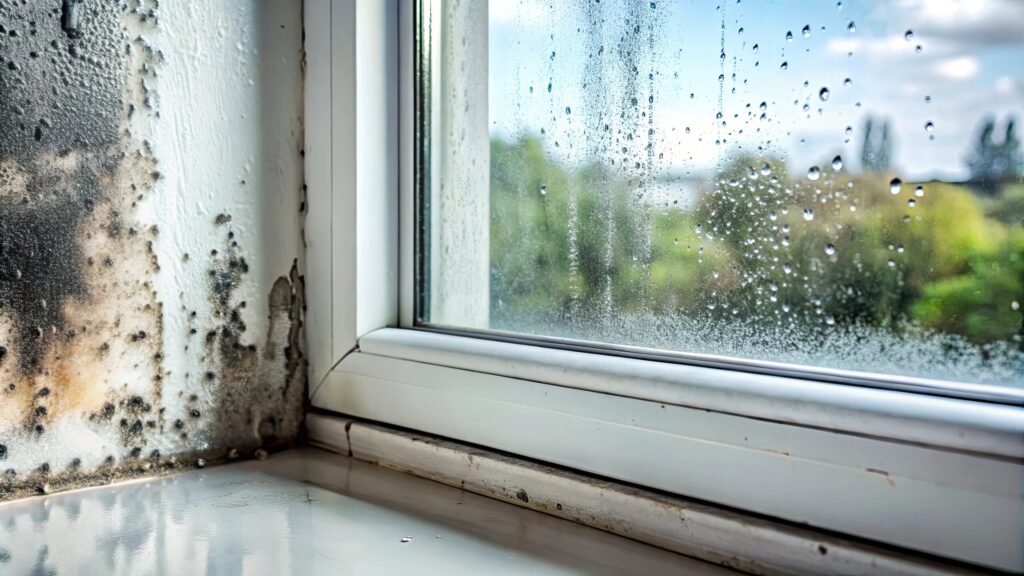
Unfortunately, that is often enough for mold to grow because mold does not require a major flood or obvious water damage. Instead, it needs just three things: moisture, warmth, and time. And an unoccupied summer home can easily provide all three conditions.
What Humidity Should You Keep Your House at in the Summer?
The Number You Need to Know
Indoor relative humidity should remain between 30% and 50% year-round. During the summer months, however, maintaining a level between 45% and 50% is a practical target for most homes.
This matters because once indoor humidity rises above 60%, conditions become much more favorable for mold growth and dust mites. Furthermore, the higher the humidity climbs, the faster these problems can develop.
What Happens When No One Is Home to Manage It
Indoor conditions can change surprisingly quickly. For example, if the air conditioning is turned off completely, indoor humidity levels can rise well above 60% within just a few days of warm, humid weather.
Fortunately, monitoring humidity does not require expensive equipment. A basic digital hygrometer, available at most hardware stores for under $20, can provide an accurate reading of indoor humidity levels.
So before leaving, it is a good idea to check that your home falls within the recommended humidity range. Then, when you return, another quick reading can help confirm that humidity levels remained under control while you were away.
Can Mold Grow at 50% Humidity?
The Honest Answer
At exactly 50% relative humidity, mold growth is unlikely, but it is not entirely impossible. The risk begins to increase noticeably once humidity rises above 55%. And when indoor humidity reaches 60% or higher, conditions become much more favorable for mold growth.
More importantly, humidity levels inside an unoccupied home rarely remain at a consistent 50%. Without air conditioning running properly or another humidity control in place, moisture levels can rise surprisingly quickly.
Why Hidden Mold Is the Bigger Concern
One of the biggest challenges with mold is that it often grows in places homeowners cannot see. During an Octagon Cleaning & Restoration podcast episode, Robert York shared an experience where mold was actively growing beneath his basement floor despite there being no flood, standing water, or obvious warning signs.
This highlights an important reality: mold problems do not always make themselves known. Because of that, the goal is not simply to leave your home at 50% humidity, but to prevent humidity levels from rising while the property sits unoccupied.
Does Opening a Window Actually Reduce Humidity?
When It Helps and When It Makes Things Worse
Many homeowners may assume that opening a window is an easy way to reduce indoor humidity. However, that only works when the outdoor air is actually drier than the air inside the home.
But during summers in Maine and New Hampshire, outdoor humidity is often high, especially in July and August. As a result, opening windows can sometimes increase indoor moisture rather than reduce it.
But there are times when opening windows can be beneficial. For example, early mornings often bring cooler temperatures and drier air.
On the other hand, opening windows can make conditions worse during a heat wave, after rainfall, or on humid summer afternoons when the outdoor air is already carrying significant moisture.
What Actually Works for an Empty Home
This leads to an important takeaway: leaving windows cracked open is not a reliable humidity-control solution. It may seem like a simple way to improve airflow, but it can just as easily introduce more moisture into the home.
Instead, the most effective approach is maintaining active humidity control. In most cases, that means keeping the air conditioning running at an appropriate setting.
Another effective option is a standalone dehumidifier equipped with a humidistat. This allows the unit to turn on automatically whenever humidity levels exceed a set threshold, such as 50%.
How to Decrease Humidity in Your Home Before You Leave for Summer
Set Your Thermostat — Don’t Turn It Off
One of the most common mistakes homeowners make before leaving for vacation is turning the air conditioning off completely to save energy. While this may reduce utility costs in the short term, it can also allow indoor temperatures and humidity levels to rise rapidly.
Therefore, keeping the system running at a moderate setting between 78 and 80 degrees Fahrenheit strikes a good balance. This allows the system to continue removing moisture from the air without running constantly.
Run a Dehumidifier on a Humidistat
In addition to running the air conditioning, a dehumidifier can provide more protection. Ideally, the unit should be connected to a humidistat and set to maintain indoor humidity at 50% or below.
Also, before leaving, make sure to empty the reservoir. If possible, connect the unit to a drain line. Otherwise, a full collection tank could cause the dehumidifier to shut off halfway through your trip.
This step is particularly important for basements. In fact, a dedicated basement dehumidifier is often a worthwhile investment in older homes.
Check Your Plumbing Before You Walk Out the Door
While humidity is a major concern, water damage can also begin with simple plumbing issues. For that reason, it is a good idea to shut off the main water supply before leaving. If that is not practical, consider shutting off individual fixtures that will not be used.
At the same time, take a few minutes to inspect vulnerable plumbing connections. Pay particular attention to washing machine hoses and under-sink supply lines. Rubber hoses naturally degrade over time and may become more vulnerable.
Don’t Overlook the Basement and Attic
If your home has a sump pump, test it before leaving. One simple method is to pour water into the sump pit and verify that the pump activates properly.
Next, move to the attic because proper ventilation plays an important role in controlling heat and moisture buildup throughout the summer. If soffit vents or ridge vents are blocked, hot and humid air can become trapped inside the attic.
A Quick Exterior Check
Finally, spend a few minutes walking around the outside of the home. Start by checking gutters and downspouts. If they are clogged with leaves or debris, rainwater may overflow and collect near the foundation instead of draining away from the house.
When a home is occupied, these problems are often noticed quickly. However, when nobody is there, water intrusion can continue for days or weeks before it is discovered.
Also when you are outside, take a close look at the grading around the property as well. Watch for low spots where water could collect and flow back toward the foundation during heavy summer rain.
What Can Happen If You Skip These Steps
Mold Doesn’t Wait for You to Come Back
In the right conditions, mold can begin establishing itself within 24 to 48 hours. As a result, a week of elevated indoor humidity can be more than enough time for growth to start.
Even more concerning is that mold often develops out of sight. This is something Robert York discussed during an Octagon Cleaning & Restoration podcast episode.
In his case, mold was actively growing beneath a basement floor despite there being no flood, no standing water, and no obvious warning signs. The conditions developed gradually and remained hidden until the issue was discovered.
A Small Problem Becomes a Big Repair
In the end, what may start as a minor issue often seems harmless at first. However, when no one is home to notice it, that same leak can continue unnoticed for days or even weeks. This concern becomes even more important for homeowners in Maine and New Hampshire, where many properties contain older building materials.
In these homes, older wood framing, original insulation, and aging plumbing systems are often less resistant to prolonged exposure to moisture, making damage more likely to spread. Because of this, the longer a problem goes unchecked, the greater the risk of significant structural damage.
The Cost of Doing Nothing
Many homeowners hesitate to invest in preventive measures, but the cost comparison is usually straightforward. For instance, a dehumidifier costs only a fraction of what mold remediation typically requires.
Similarly, keeping an air conditioner running at a moderate thermostat setting is far less expensive than replacing water-damaged flooring, drywall, or insulation.
The same logic applies to basic inspections, maintenance checks, and small repairs. These steps may feel like an added effort upfront, but they are relatively minor in both time and cost.
Come Home to the House You Left
Peace of Mind Before You Go and After You Return
This checklist may seem like one more thing to do before vacation. However, a few preventative steps today can make the difference between returning to a normal home and returning to a stressful situation that requires immediate attention.
After all, the goal is not just preventing damage. It is also giving yourself peace of mind while you are away.
And even with proper preparation, it is still a good idea to pay attention when you return home. If you notice a musty odor, a stain that was not there before, dampness in the basement, or anything else that seems unusual, it is worth investigating sooner.
Get a Free Inspection From Octagon
If you would like additional peace of mind before leaving or after returning, Octagon Cleaning & Restoration offers free inspections throughout Maine and New Hampshire.
And if anything feels off, even if you’re not sure whether it’s a real issue, it’s always better to have it checked early rather than wait for conditions to worsen.
For a free inspection, contact Octagon Cleaning & Restoration:
- Maine: 207-893-0002
- New Hampshire: 603-239-2100


