

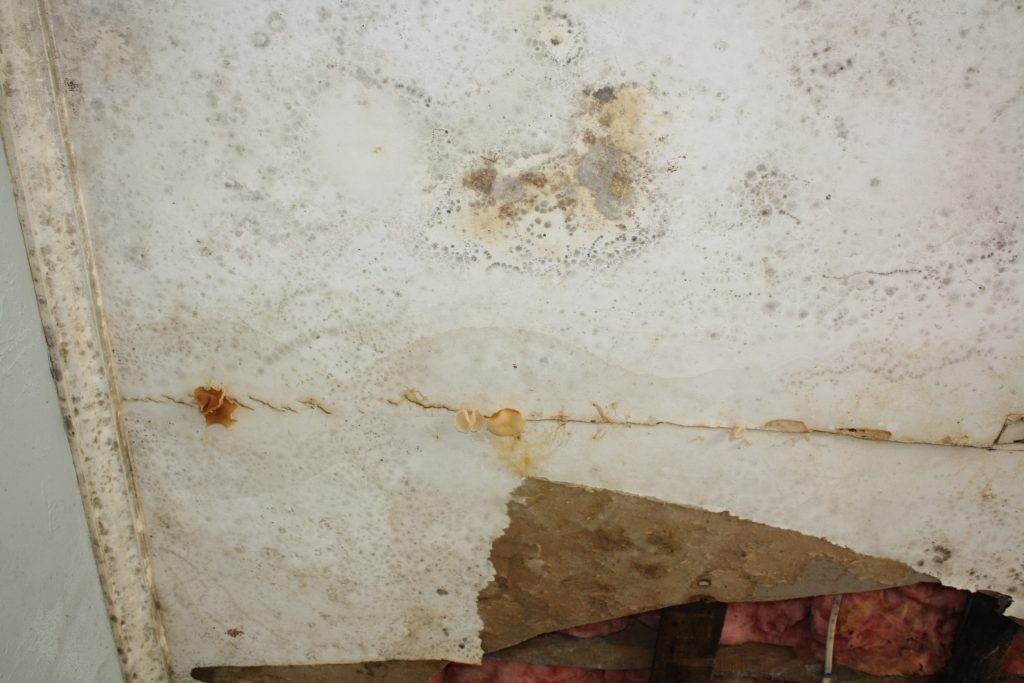
When you finally return to your camp after months away, everything looks familiar at first, almost like nothing has changed. But then you step inside, and something feels slightly off, a smell that does not belong, a damp chill in the air, or a mark on the wall you are sure was not there last fall.
The reality is, after a long Maine or New Hampshire winter, seasonal homes do not stay still. Pipes can freeze and crack, moisture can move behind walls, and small issues can quietly develop. That’s why winter damage in seasonal homes often reveals itself right at the start of summer, during that first visit back.
This guide walks you through what winter may have left behind, what to look for in those first few hours, and why catching small issues early can make a real difference for the season ahead.

The Moment You Walk In
As you start walking through the space, you may notice signs that something may have changed. It might be a musty smell, a damp chill, or maybe even a ceiling stain. This can happen because your camp has been sitting unoccupied for months. During that period, even something as small as a slow pipe leak, minor roof seepage, or groundwater intrusion can continue causing damage.
As a result, by the time spring arrives, a minor issue may have already developed into something much larger.
Maine consistently ranks among the highest states in the country for seasonal housing, with roughly 16 – 17% of homes classified as seasonal, recreational, or occasional use ( U.S. Census housing data). New Hampshire also remains well above the national average. That means thousands of owners return each year to properties that have been vacant all winter.
The good news is that many costly problems are often discovered right at this moment, during that first walk-through. And if you know what to look for, you can easily manage the whole situation.
Your Walk-Through Checklist
Basement & Crawl Space
Look for standing water, damp corners, or waterlines on walls. White chalky residue, known as mineral deposits, can also point to repeated moisture movement through concrete.
Pay attention to smell as well. A musty odor is often one of the earliest signs. Also, test the sump pump if you have one, because it may have been working all winter. Pour water into the pit and make sure it activates, pumps properly, and drains away from the house.
Then check the foundation walls for cracks. Freeze-thaw cycles can create new entry points for groundwater. Finally, inspect anything stored below grade, such as boxes, furniture, or tools, for moisture damage, mildew, or odor.
Attic
After that, head up to the attic. Look at the roof sheathing for dark staining, discoloration, or visible spotting. Ice dams can push water under shingles and into the attic for weeks without being noticed.
Observe the insulation in a few areas as you move carefully. If it feels damp or compressed, it may no longer insulate properly.
Also look for daylight coming through roof boards, signs of animals nesting, or blocked soffit vents that reduce airflow.
Ceilings & Walls (Throughout)
Watch for yellow, brown, or dark stains, especially below bathrooms, around windows, near chimneys, or along exterior walls.
In addition, look for peeling paint, bubbling wallpaper, or drywall that feels soft or slightly spongy. Those are common signs that moisture is trapped behind.
And do not ignore smell. If one room carries a persistent earthy or musty odor, even when everything looks clean, hidden dampness may still be present.
Plumbing System
Then move fixture by fixture and inspect exposed pipes, shutoff valves, and joints for drips, sweating, or staining. Pipes that froze over winter sometimes stay hidden until pressure returns.
Flush each toilet and run every faucet for several minutes. Listen for gurgling drains or slow-draining water, which can suggest venting or sewer line issues.
Next, open cabinets beneath sinks and check for warped wood, mineral buildup, staining, or damp surfaces from slow leaks. Finally, inspect the water heater for rust, moisture pooling near the base, or unusual noises.
Appliances
Inspect dishwasher and washing machine hoses for cracking, brittleness, or bulging. Rubber hoses degrade faster in cold or unheated camps. Then check around and behind the refrigerator for moisture, leaks, or signs of previous pooling.
Also, run the dishwasher or washing machine through a cycle while you are present. Many first-day leaks happen when idle equipment is used again after months of sitting still.
Exterior
Lastly, check gutters and downspouts for ice damage, loose sections, or debris buildup. If water cannot move away properly, it often ends up near the foundation. From the ground, inspect the roofline for missing shingles, sagging spots, or bent flashing.
Also, look at the grading around the home. Is the ground still sloping water away from the foundation, or did winter settling create low spots that now direct runoff back toward the house? Lastly, watch for animal entry points around soffits, vents, crawlspace openings, or damaged siding.
The Issues You Can't See
A careful walk-through is one of the smartest things you can do when opening camp for summer. However, some of the most important problems are the ones you cannot see on day one.
For instance, moisture rarely stays out in the open. It can move behind drywall, under flooring, inside insulation, or beneath cabinets.
One of the clearest examples of this comes from Robert York, who shared his personal experience in The Octagon Cleaning & Restoration “More Than Mold” podcast episode available on YouTube. His basement appeared to be in excellent shape. It was climate-controlled, finished with non-cellulosic materials, had sealed concrete, and vinyl plank flooring.
There were no visible signs of mold. Yet a furnace leak had traveled an unexpected path beneath the surface. Mold was growing on biofilm between the concrete and the vinyl, producing spore counts of around 9,000 per cubic meter.
His takeaway was simple: without testing, he would have believed the basement was completely fine.
That story matters because Robert was living in the home and still did not catch it. For a camp that has been vacant since October or November, the chances of hidden damage going unnoticed are naturally even higher.
This is especially true after winter. According to the EPA and FEMA, mold can begin growing on damp materials within 24 to 48 hours when moisture is present.
And it can also affect the air you breathe. The CDC notes that mold exposure may contribute to coughing, wheezing, nasal irritation, allergy symptoms, and asthma flare-ups in sensitive individuals.
For families returning with children, this is worth keeping in mind, since younger respiratory systems can be more vulnerable.
The good news is that hidden damage does not have to stay hidden. At Octagon Cleaning & Restoration, we use tools, such as moisture meters and thermal imaging cameras, to understand what is happening beyond what the eye can see.
Why Timing Matters More in May and June
Across northern New England, temperatures rise quickly during May and June. In Portland, Maine, average high temperatures typically climb from about 57°F in May to around 65°F in June, while in Concord, New Hampshire, they climb from 66°F in May to 74°F in June, according to monthly climate averages.
As a result, these warmer conditions become far more favorable for mold activity. Damp materials that stayed relatively inactive through winter can become a much bigger concern once temperatures rise.
Spring also adds a second layer of risk. Heavy rain, snowmelt runoff, saturated soil, rising water tables, and early-season thunderstorms can all introduce fresh moisture to a property.
That is exactly why the first visit of the season should ideally not be the same weekend you are arriving with family. Instead, if possible, plan an earlier trip focused only on inspection.
Give yourself a week or two before fully settling in. Use that time to work through a second home inspection checklist, test major systems, check for signs of moisture, and handle any concerns.
And if anything feels uncertain, it may be the right time to have the property professionally assessed.
A Seasonal Homeowner's Story
One seasonal homeowner, L.Y., shared what happened to their lake house following a difficult spring when rising groundwater led to serious basement flooding. Their words immediately capture how unusual the situation was:
“In 48 years of living in this home, we never had such an experience. We didn't realize the extent of the damage until our June 2024 visit.”
He described mold overtaking the basement, which quickly became their greatest concern because of possible health effects.
When he contacted Octagon Cleaning & Restoration, our first priority was to stabilize the situation and prevent further spread. We began by assessing the full extent of moisture intrusion and then set up immediate containment measures to isolate affected areas.
Once containment was in place, we moved into the remediation phase. Damaged and mold-affected contents were carefully removed, followed by targeted deconstruction of impacted materials where necessary to expose hidden moisture.
From there, we installed professional drying systems to bring moisture levels back under control and make sure no hidden dampness remains.
“Their team did not consider their work completed until our basement was back to a dry, clean and live-able condition.”
In the end, the mold was remediated, and the basement was restored. Stories like this are a reminder that even a property with decades of history can experience a first-time event. But with the right response, even serious problems can be handled properly.
How Octagon Helps Seasonal Homeowners
When you open your camp for the summer, and something does not look right, the smartest step is to get clarity instead of guessing. That’s why Octagon Cleaning & Restoration offers free inspections for homeowners.
The goal is to provide honest answers and clear direction. In most cases, the outcome is straightforward: either you get a clear next-step plan, a referral for specialized testing if needed, or confirmation that everything is fine and no action is required.
Octagon also regularly supports remote homeowners who are not on-site full-time, with updates shared through calls, emails, and photo documentation so you always know what’s going on, even from a distance.
If something feels off during your first walkthrough, it’s worth getting a professional opinion early.
Call now for a free inspection:
Maine: 207-893-0002
New Hampshire: 603-239-2100


