

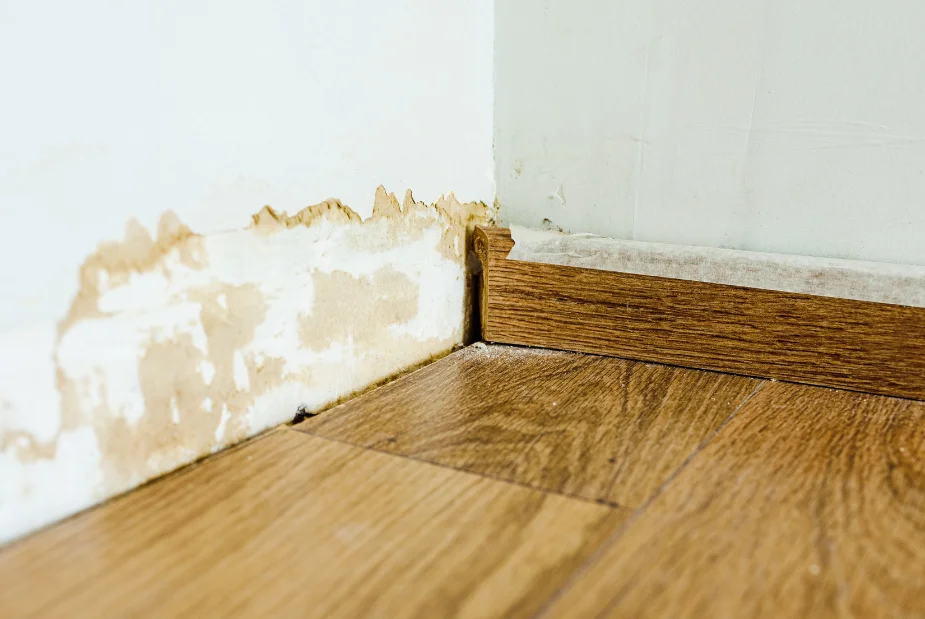
Every year in Maine, as winter fades into late spring, basements that felt fine all winter start showing the first signs of a moisture problem. One week, everything feels dry and stable, and the next, there’s a faint musty smell, a bit of condensation on cold pipes, or a damp-air feeling you cannot quite ignore.
The truth is, this is not random. It is a predictable seasonal shift. When your heating system shuts off in the spring, it stops passively drying your basement air. At the same time, outdoor humidity rises, and that’s where moisture problems quietly begin.
And in places like Maine, where many homes were built decades ago, those changes can show up quickly. That’s why it’s important to understand what’s actually happening in your basement, and what you can do early on before it turns into a much bigger problem.

What’s Actually Happening in Your Basement Right Now
The Humidity Switch (Why Late Spring Is Different)
During winter, your heating system is not just keeping your home warm; it’s also drying out the air. As heat runs through your home, it naturally lowers indoor humidity levels. However, once late April or May arrives, that system shuts off. And without that passive drying effect, moisture begins to stay indoors.
At the same time, outdoor conditions shift in the opposite direction, temperatures rise, and humidity levels increase. In Maine, summer humidity regularly reaches 60–80%, which means the air coming into your home is carrying significantly more moisture.
And in many Maine homes, especially older ones, basement walls and floors stay cool because they are in direct contact with the earth. According to the Maine Indoor Air Quality Council, the earth temperature remains cool all year long. Summer heat and humidity levels will cause condensation to form on any uninsulated basement surface that is in contact with the cold earth.
So when that warm, humid air enters your basement and hits those cooler surfaces, condensation forms. As a result, moisture starts building up on walls and floors.
And unfortunately, under the right conditions, mold can begin growing within just 24 to 48 hours. What’s more concerning is that this problem is getting worse over time.
Why Older Maine Homes Are Especially Vulnerable
Older properties in places like Brewer and Fairfield tend to feel this shift the most. In Brewer, Maine, just over 30% of homes were constructed before 1940, while in Fairfield, Maine, that number climbs to more than half. These homes were built in a very different era of construction, long before modern insulation and moisture control systems.
Back then, basements were not meant to be comfortable living spaces. Instead, they were used for storage, root cellars, or utility access. For example, these homes often have stone, brick, or rubble foundations. These materials naturally allow moisture to pass through over time.
In addition, insulation below ground level was either minimal or completely absent, which means basement surfaces stay cold year-round. At the same time, most of these basements lack proper vapor barriers, the protective layers that prevent ground moisture from entering the home.
And after 80 or more years, original drainage systems around the foundation may no longer work effectively, if they exist at all. As a result, moisture has multiple entry points and very few barriers stopping it.
Moreover, location also matters. Both Brewer and Fairfield are situated in river valleys, the Penobscot and Kennebec, respectively. Because of this, they tend to have higher water tables.
During snowmelt season and periods of heavy rain, groundwater pressure increases, pushing moisture up against basement walls. When you combine all these factors, it becomes clear why these homes struggle during late spring and summer.
The 5 Things You Can Do This Week
Start with a hygrometer: First, pick up a small humidity gauge (called a hygrometer). You can find one at almost any hardware store, and it’s usually inexpensive. Place it in your basement. If the reading goes above 60% relative humidity, that’s your early warning sign.
Run a dehumidifier, and keep it running: Once the heating season ends, your basement needs active dehumidification. Place a dehumidifier, and set it to keep humidity at 50% or lower, and try to run it consistently. If possible, connect it to a drain so you don’t have to keep emptying the tank.
Take a few minutes to look for condensation: Walk around your basement and pay attention to the usual trouble spots. Check cold water pipes, foundation walls (especially the parts below ground level), window frames, and any metal surfaces. If you notice water droplets or even a slight dampness, that means moisture is building up.
Open up and inspect stored areas: Move boxes a few inches away from the walls. Look behind shelves, and check under rugs or mats if you have any on the floor. Mold tends to grow in hidden, low-airflow spaces.
Use your nose: A musty, earthy smell that was not there in February is a warning sign, even if you can not see anything wrong yet. Mold produces that odor before it’s visible, so if something smells off, inspect it.
When to Call a Professional (and What to Expect)
The Signals That Mean It’s Time
At a certain point, you may start to notice a few issues that need a closer look. For example, if you have been running a dehumidifier consistently but your basement still smells musty, that’s something worth paying attention to.
Visible discoloration is another signal. If you are noticing dark spots, staining, or patchy growth on walls, floors, or even stored items, it’s likely active mold.
Health is also a major concern. If you or anyone in your home experiences symptoms like headaches, congestion, fatigue, or even brain fog, and those symptoms improve when you leave the house, that can be an important clue.
You’ll also want to watch for condensation that does not go away. If surfaces are still damp even with active dehumidification, it usually means moisture is coming from the foundation or the surrounding ground.
And finally, think back to any past water issues. Even something that seemed minor at the time, like a small leak or a bit of seepage, can come back later if moisture remains trapped behind walls.
What a Free Inspection Actually Looks Like
With Octagon Cleaning & Restoration, a free inspection is exactly what it sounds like. A project manager comes out to your home, takes a look at what’s going on, and gives you a straightforward, honest assessment. There’s no charge for the visit, and there’s no obligation to move forward with anything.
From there, they’ll visually inspect the areas you are concerned about and use moisture meters to check what’s happening beneath the surface. This helps identify whether the issue is active or something that is already under control.
And importantly, not every visit turns into a project. Sometimes, the answer really is: you are all set. If everything looks normal, they’ll tell you that. However, if there are signs of concern, they’ll walk you through the next step.
As Robert explains in Octagon’s podcast, they make a clear distinction between a general inspection and a full mold assessment, and when health concerns or air quality questions come into play, they prefer to rely on independent testing rather than guess.
Customer Reviews
At the end of the day, what really matters is how a company shows up when people need help the most. And when you look at real experiences from homeowners, a few patterns start to stand out: clear communication, honest guidance, and work that actually solves the problem long-term.
One homeowner shared their experience after dealing with mold in an older property:
“I had a great experience working with Octagon for mold remediation in an older island house and would highly recommend them. Their office was professional and easy to communicate with. They came out and did a thorough assessment, explained everything in detail, and gave me a fair quote. Octagon goes beyond just removing mold; they will actually make corrections to basic infrastructure… to actually prevent mold buildup. The guys who did the work were extremely professional, communicative, and efficient.”
Madeleine Pryor
“Robin, Matt and crew were amazing. We found mold in our basement and they came right out and inspected it. They came up with a plan to take care of the issue. They kept us informed what was going on and what they were doing throughout the process and the next steps. We would definitely use them again!!”
Nickels Properties
That consistency, showing up quickly, explaining what’s happening, and keeping homeowners in the loop, can make a stressful situation feel a lot more manageable.
Your Instinct is Worth Listening To
Maybe you noticed a smell. Maybe you saw something on a wall and aren’t sure what it is. Maybe you have just been thinking about your basement as the weather warms up, and something felt off.
That instinct is worth listening to. If you are not sure what you’re dealing with, Octagon offers free inspections with no obligation. A project manager will come out, take a look, give you honest readings, and tell you straight what they see.
Call now for a free inspection:
- Maine: 207-893-0002
- New Hampshire: 603-239-2100


