

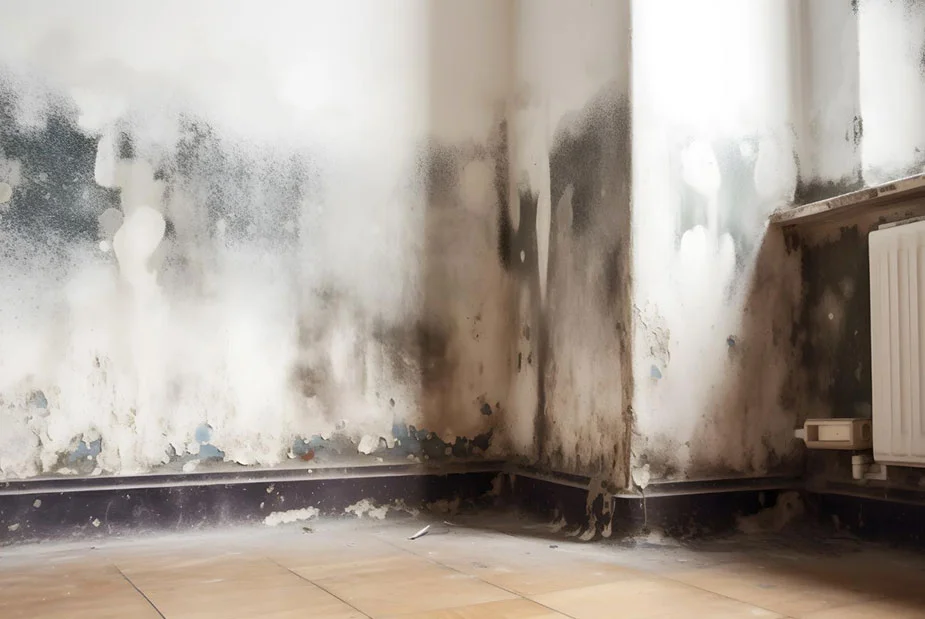
For a lot of Maine and New Hampshire homeowners, the question doesn’t come from an obvious disaster. It starts smaller than that — a faint musty smell you notice when you walk in the door, a headache that lingers for no clear reason, or just a general feeling that something’s a little off.
Then you hear that a neighbor went through mold remediation. Or a coworker mentions it. And suddenly the question you’ve been quietly pushing aside moves to the front of your mind: Do I have mold?
That uncertainty is uncomfortable and it’s more common than you think. The problem with mold is that it rarely announces itself. It grows in places you don’t see, behind walls and under floors, and the early signs are easy to dismiss. So rather than get an answer, most homeowners wait. They hope the smell goes away. They tell themselves it’s probably nothing.
This post is for the homeowners who are done waiting and just want a straight answer.

When You Should Call for a Free Mold Inspection
You don’t need to see mold to have a mold problem. And you don’t need to be certain before you call, that’s what the inspection is for. Here are the signs homeowners most commonly report before finding mold in their home:
You notice a musty or earthy smell — especially in basements, attics, closets, or after running the HVAC. If the smell comes and goes, it often means mold is present but not always active.
You’ve had water damage in the last year or two — a leaky roof, a burst pipe, a flooded basement, or even a slow drip under a sink. Mold can begin growing within 24–48 hours of moisture exposure, and it doesn’t stop once things dry out on the surface.
Someone in your household is experiencing unexplained symptoms — persistent headaches, congestion, coughing, or allergy-like symptoms that seem to improve when they leave the house. This is one of the most important reasons not to wait.
You can see discoloration on walls, ceilings, or grout — dark spots, fuzzy patches, or staining that keeps coming back even after cleaning.
Your home has had recurring condensation or humidity issues — around windows, in crawl spaces, or in rooms that never seem to dry out properly.
You’re buying or selling a home — a mold inspection before closing can prevent a much bigger problem later.
If any of these apply, a free inspection is the right next step. You might find out you don’t have a problem at all, and that answer alone is worth the call. Read more about early signs of mold.
What an Honest Mold Inspection Actually Looks Like
A proper site visit is never rushed. A credible inspector will walk through your home carefully, paying close attention to the areas where mold is most likely to develop. This usually includes basements, crawl spaces, bathrooms, attics, and anywhere moisture tends to stay.
At the same time, they’ll look for visible signs like staining or discoloration. They’ll also be checking what you cannot see. For example, they may use moisture meters to detect dampness inside walls or ceilings.
In some cases, they might also use thermal imaging to identify hidden water intrusion. These tools help confirm whether there’s an actual problem or just a surface concern.
These questions matter because mold usually follows moisture. So, understanding the history of your home helps. At the end of the visit, we will give you a clear, direct answer.
“Called Octagon out to look at water damage & mold concerns after demolition and cleaning . Matt was very honest and thorough with his inspection and was able to verify the absence of mold after a self cleanup. Don’t second guess your family’s health and safety after a water damage incident, trust the professionals word! We hope we never have to deal with an incident regarding water intrusion again, but if we do we know who we can turn to for both remediation and inspection. Thanks Matt & Octagon Cleaning!!!”
Nick
Our 5-Year Warranty for Mold Remediation
The warranty applies to mold remediation jobs completed the right way — with the proper scope, proper testing, and proper documentation. It covers situations where mold returns to an area we treated within five years of the completed job.
The standard we hold ourselves to is what the industry calls Condition 1. This means no visible mold growth and an airborne spore count that is similar to or lower than the outdoor control sample taken on the same day. Reaching Condition 1 is not just a visual check, it requires post-remediation air testing to verify the results.
That verification step is what the warranty is built on. We do not simply tell you the job is done. We test to confirm it.
The Real Reason Homeowners Don't Pick Up the Phone
Most people hesitate for one of three reasons: they’re afraid of the cost, worried it could complicate a home sale or insurance claim, or they don’t want to feel like they overreacted if nothing is found. Any one of those is enough to keep someone waiting longer than they should.
Here’s the reality — making the call doesn’t commit you to anything. It just gives you information.
The other hesitation is harder to name. Once you do decide to call, you’re putting trust in someone you don’t know to assess your home honestly. And in an industry with no consistent state or federal regulation, that’s a legitimate concern. Almost anyone can call themselves a remediator.
That’s why the first thing we’ll tell you, if there’s nothing there, is exactly that. No upsell, no manufactured urgency. And when a situation involves health symptoms or anything beyond what’s visible, we refer clients to an independent third-party industrial hygienist — so the assessment isn’t just coming from us.
Get a Free Inspection: No Pressure, No Guessing
At the end of the day, the question in the title, “Do I have mold?”, deserves a real answer. And the only way to get that answer is to ask.
That’s why at Octagon Cleaning and Restoration, we offer free inspections, so you can get a clear understanding of what’s going on without feeling locked into anything.


