

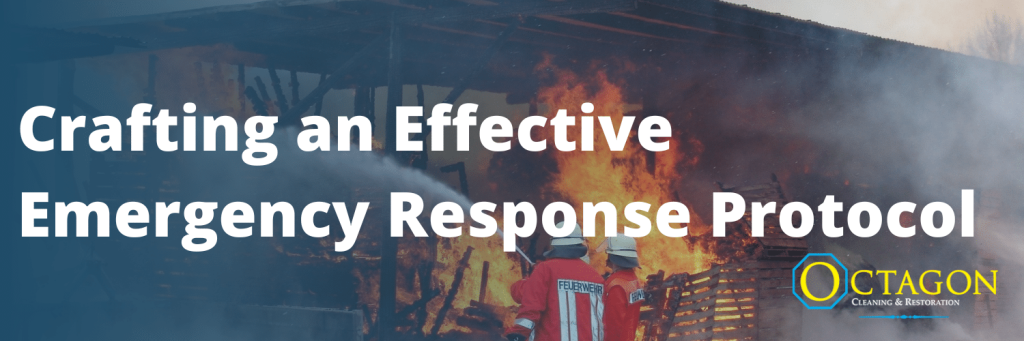
An Emergency Response Protocol (ERP) is a comprehensive plan that outlines how a company should react in the event of an emergency, disaster, or any unforeseen situation that could affect a business’s continuity. Be it a fire, flood, weather event, or other natural or manmade disaster, having an ERP on hand can help ensure a quick, effective, and actionable response to minimize harm, reduce confusion, and prevent further damage that can facilitate recovery.
Crafting an ERP has its own set of challenges. At the very least, the document should establish procedures and clear guidelines for managing crises, prioritizing safety and protecting employees, communicating with emergency personnel and stakeholders, and resuming normal operations.
Octagon Cleaning & Restoration specializes in developing ERPs for businesses to help them prepare for any potential disaster and ensure the business survives the disaster. Our team of certified, professional restoration experts can help you evaluate your readiness for an emergency, providing the necessary insights and experience to safeguard your business or property with confidence.
It’s important to recognize that there are many details a business should consider when developing a plan and, just as important, that no two plans are alike. Nonetheless, several key components and considerations are typically included in an ERP and ones that we would recommend, including:
Risk Assessment and Mitigation
One important first step when crafting your ERP is conducting a risk assessment. You will want to identify potential emergencies and risks associated with your business and facility and then know what to do. For example, the potential for natural disasters like floods, severe thunderstorms, tornadoes, or wildfires should be assessed, as should the effects of any technology-related disasters such as power outages and cyberattacks. Any of these disasters could also lead to medical emergencies that need to be addressed.
Once you have identified any potential risks, assess the likelihood and impact of each, and then develop mitigation strategies to reduce these risks. Should a disaster strike occur, a designated emergency response team with clearly defined roles and responsibilities should be established to manage the crisis. Other considerations may include an upgrade of your fire alarm or fire suppression system, ensuring easy access to necessary emergency equipment like fire extinguishers, or installing a backup power source.
Safety
Safety is one of the primary objectives of an ERP. Your plan should outline procedures to protect employees, customers, and visitors from harm during emergencies to prevent injuries and fatalities. For example, an evacuation plan should be implemented in case of a fire. Your ERP should designate assembly points and marked evacuation routes that lead to unobstructed exits. On the other hand, in a severe weather event, it may be necessary to shelter in place. Develop procedures for when staying indoors is safer than evacuating and identify safe areas within the facility to shelter.
Communication Plans
Another component of your ERP is having a communication plan in place. This would include establishing external and internal lines of communication for emergency notifications. Develop templates for designated personnel to convey the type of emergency to stakeholders. In an immediate emergency, designated personnel should not hesitate to call 911. However, your ERP should establish relationships with local emergency services like the fire department, police, or medical services, and you should also know how to coordinate with these external agencies during emergencies effectively. Communication with other external stakeholders, like vendors, clients, and other service providers, should be included in the ERP. For internal communication, your ERP should establish clear channels of who to contact within the organization. In other words, designated personnel need to know who to call first. You can also utilize phone trees, email alerts, and messaging apps to get the word out quickly and efficiently.
Business Continuity Plan
Your ERP should include a plan to minimize downtime and maintain or quickly resume critical business functions. In fact, preparing for emergencies can enhance the overall resilience of the business, making it better equipped to handle unexpected challenges. Your plan may include backup locations, data recovery procedures, and a list of key contacts. The key is maintaining critical operations to help reduce financial losses from any disruption to services.
Implementing a comprehensive Emergency Response Protocol helps businesses better prepare for unexpected events, ensuring a coordinated and effective response that prioritizes safety and minimizes operational disruptions. Partnering with a full-service restoration company like Octagon Cleaning & Restoration to help you develop a custom plan—one that best fits your business needs—will ensure that your business is disaster-ready.
We are a full-service OSHA and EPA-certified restoration company specializing in ERP planning and implementation. When you partner with us, we cover every detail and contingency in advance. In an emergency, our trained professionals will seamlessly manage the crisis step-by-step, from communicating with the insurance company through mitigation, recovery, and restoration to ensuring your company is up and open for business as quickly as possible.
For more information on our ERP services, contact Octagon Cleaning & Restoration today!


